Research
Our goal is to explain how the brain selects what to process when evidence is noisy, incomplete, or costly. We start from a normative question: given limited capacity, which information should an agent sample, and for which objective? We formalize the answers as sampling policies, fit them to behavior with computational models, and test their predictions in neural population representations measured with MEG and EEG.
In natural environments, information sampling takes place in a multidimensional space. We study two of its dimensions, decision alternatives and sensory modalities. An overarching level, “sampling policies and objectives”, develops the theory that explains both.
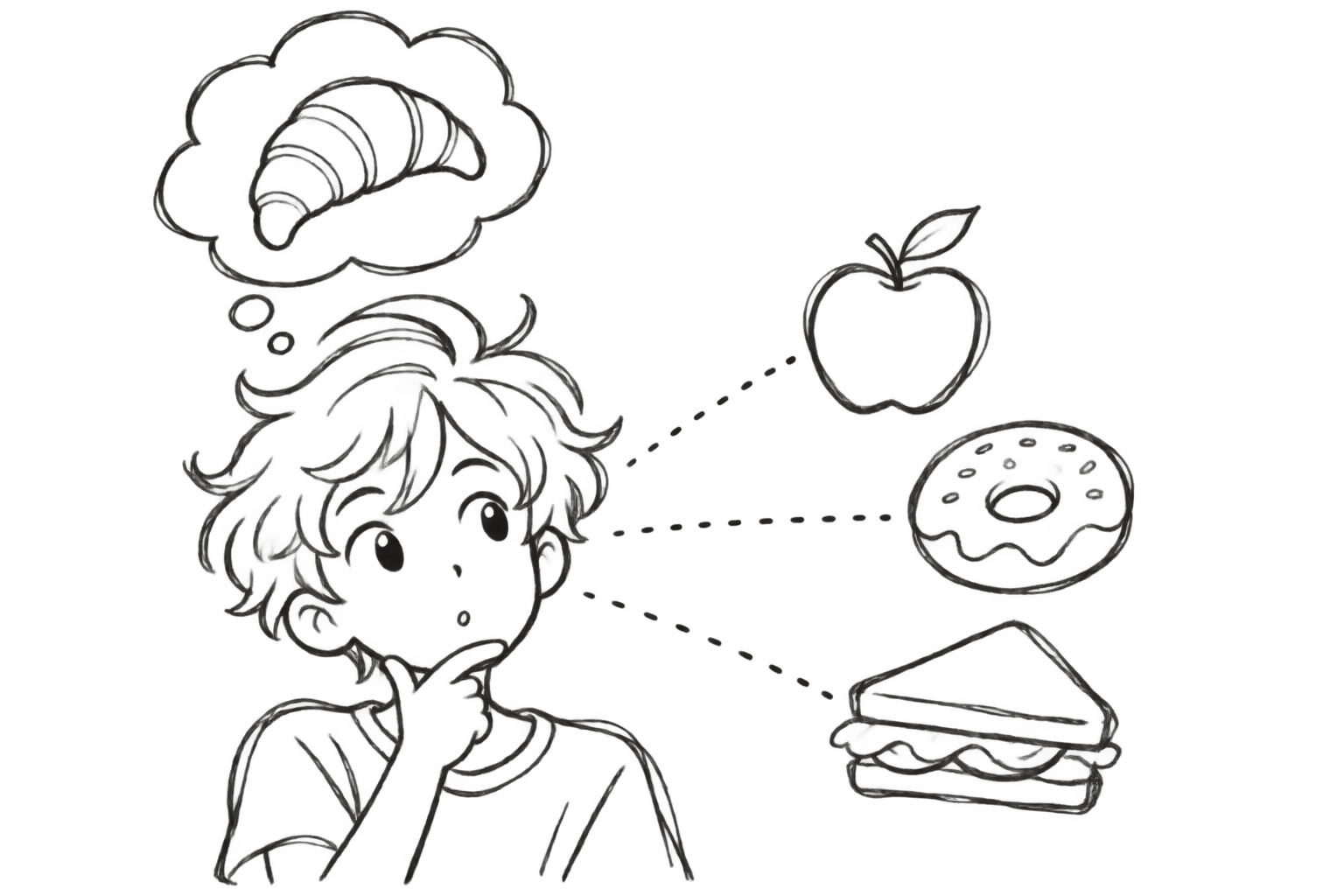
How do overt and covert sampling shape the weighing of alternatives?
1. Sampling across decision alternatives
Which options to sample and weigh. Choices between several alternatives depend on how each option is sampled and compared. We ask how choice biases arise from this process, and why an option that cannot be chosen still shifts preferences.
Example work
Clarifying the role of an unavailable distractor in human multiattribute choice (2022, eLife)
Yinan Cao, Konstantinos Tsetsos
Perspectives on the mechanistic underpinnings of choice biases (2025, book chapter, Springer)
Konstantinos Tsetsos, Yinan Cao
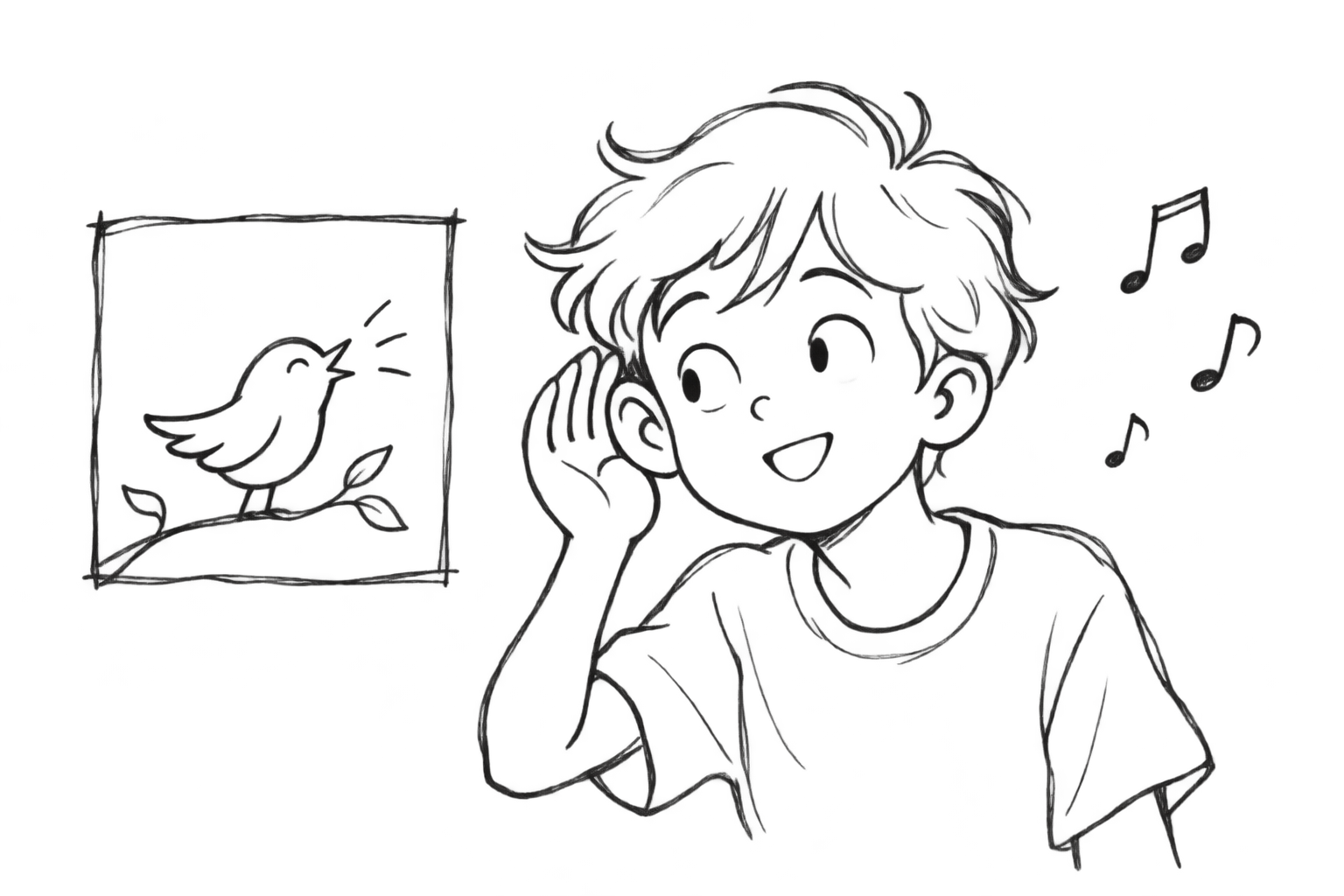
How do vision and hearing combine into one percept that guides choice?
2. Sampling across sensory modalities
Which sources to combine. Sensory signals should be integrated when they share a cause and kept apart when they do not. We ask how the brain makes this flexible decision, and how it unfolds in neural population representations within single trials, measured with MEG at millisecond resolution.
Example work
Causal inference in the multisensory brain (2019, Neuron)
Yinan Cao, Christopher Summerfield, Hame Park, Bruno L. Giordano, Christoph Kayser
3. Sampling policies, attention, and objectives
Which information to seek, and when. Both dimensions above are instances of one problem: an agent with limited capacity must decide what to sample to serve an objective. We ask which policies solve this problem, how attention moves across alternatives over time, and how the objective, reward seeking or information seeking, changes the policy. Competing policies make different predictions for behavior and for neural population representations, so the data can tell them apart.
Example work
Humans use a dual policy to improve inferences during epistemic information seeking (2026, Nature Human Behaviour, in press)
Yinan Cao, Clémence Alméras, Junseok K. Lee, Inès Maye, Valentin Wyart
Rhythmic sampling of multiple decision alternatives in the human brain (2026, Nature Communications)
Marcus Siems, Yinan Cao, Maryam Tohidi-Moghaddam, Tobias H. Donner, Konstantinos Tsetsos
Facilities and networks in Magdeburg
The lab is part of the Institute of Psychology at Otto-von-Guericke University. We are embedded in the Magdeburg neuroscience community and benefit from its shared infrastructure.
Within the Institute of Psychology. Our lab and the General Psychology division host EEG (BioSemi) and multiple eye tracking (EyeLink) systems for behavioral and electrophysiological experiments.
MEG. The Leibniz Institute for Neurobiology (LIN) runs a whole-head Elekta Neuromag TRIUX system. It has 306 channels (102 magnetometers and 204 planar gradiometers) in a magnetically shielded room. MEG has millisecond resolution, which suits questions about attention sampling and decision dynamics. The lab has access through a collaboration with LIN.
Functional MRI. Several scanners at 3T and 7T are available across the OvGU campus and LIN. The lab and the General Psychology division have frequent access to them through local collaborations.
Networks. Magdeburg hosts a dense network of neuroscience research, including the Center for Behavioral Brain Sciences (CBBS), LIN, and the German Center for Neurodegenerative Diseases (DZNE), as well as larger consortia such as the CRC 1436 on Neural Resources of Cognition and the Research Training Group 2413 on the Aging Synapse. The lab is connected to this community through the General Psychology division, whose members take part in CBBS and CRC 1436, and we are building further links, including with LIN.